Dicing is a fundamental culinary technique that involves cutting ingredients into uniform, small pieces. Here’s a general guide on how to dice, along with specific examples for onion, celery, and carrots.
General Steps for Dicing:
1. Prep Your Tools: You’ll need a sharp chef’s knife, a cutting board, and a stable surface to work on.
2. Wash and Peel (if needed): Clean your vegetables and peel them if the skin is tough or undesirable.
3. Cut Off the Ends: Trim off the root end and the stem end of the vegetable.
4. Halve or Quarter: Depending on the size of the vegetable, you may need to halve or quarter it to create manageable pieces.
5. Create Planks: Lay one of the flat sides of the vegetable down and cut it into planks of your desired thickness. For a small dice, aim for about 1/4 inch (6 mm) wide planks.
6. Stack the Planks: Stack several planks together.
7. Cut Strips: Slice the stacked planks into strips, again aiming for the same thickness as your planks.
8. Dice: Finally, turn the strips 90 degrees and cut across them to create small cubes.
Specific Examples:
1. Onion:
– Cut off the root end but leave the stem end intact. This will help keep the onion together while you dice it.
– Cut the onion in half through the stem end.
– Peel the skin off each half.
– Lay one half flat and make horizontal cuts (planks) towards the stem end.
– Turn the onion half and make vertical cuts (strips).
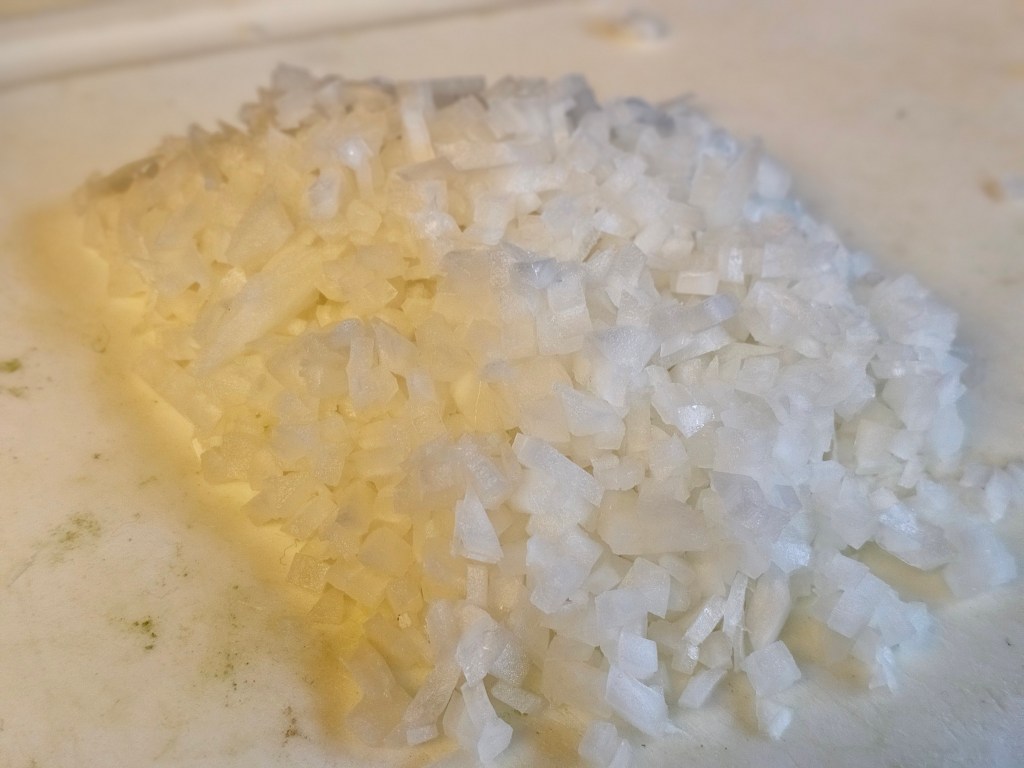
– Dice the onion by cutting across the strips.
2. Celery:
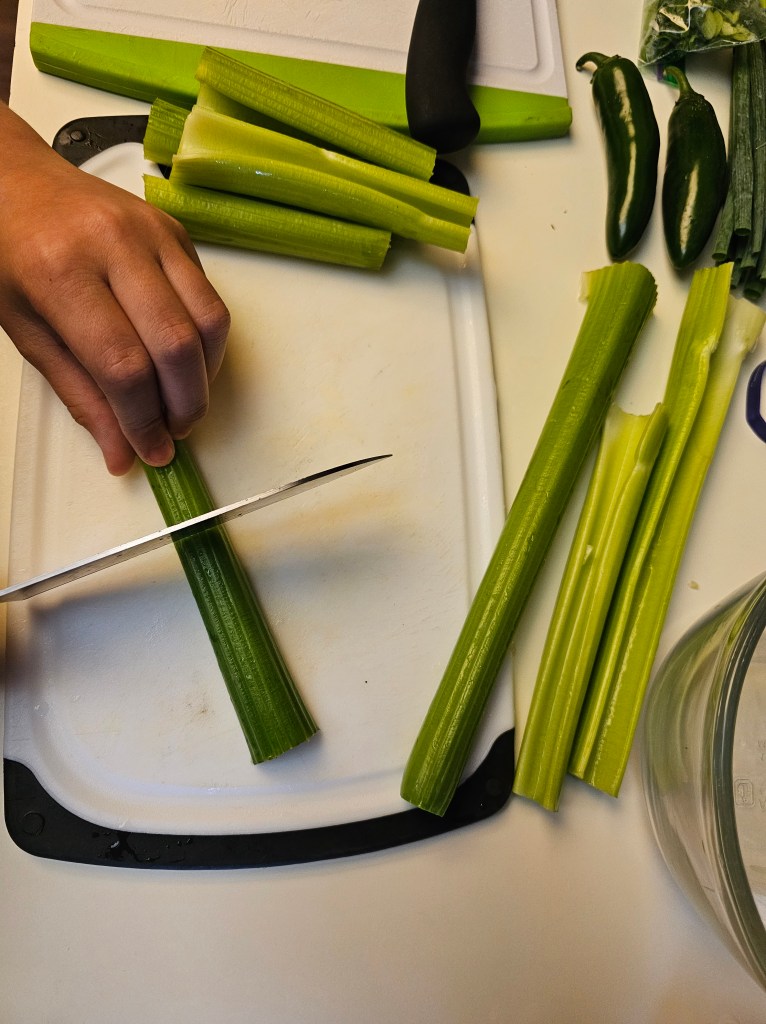
– Cut off both ends of the celery stalk.
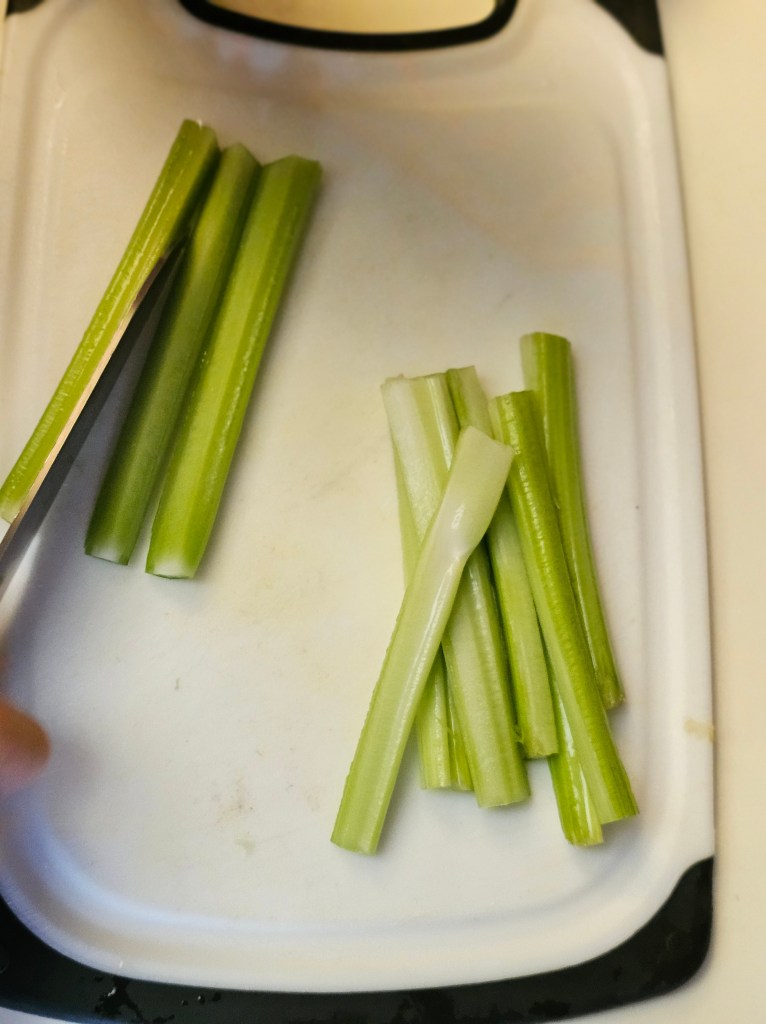
– Slice the celery stalks into planks.
– Stack the planks and cut them into strips.
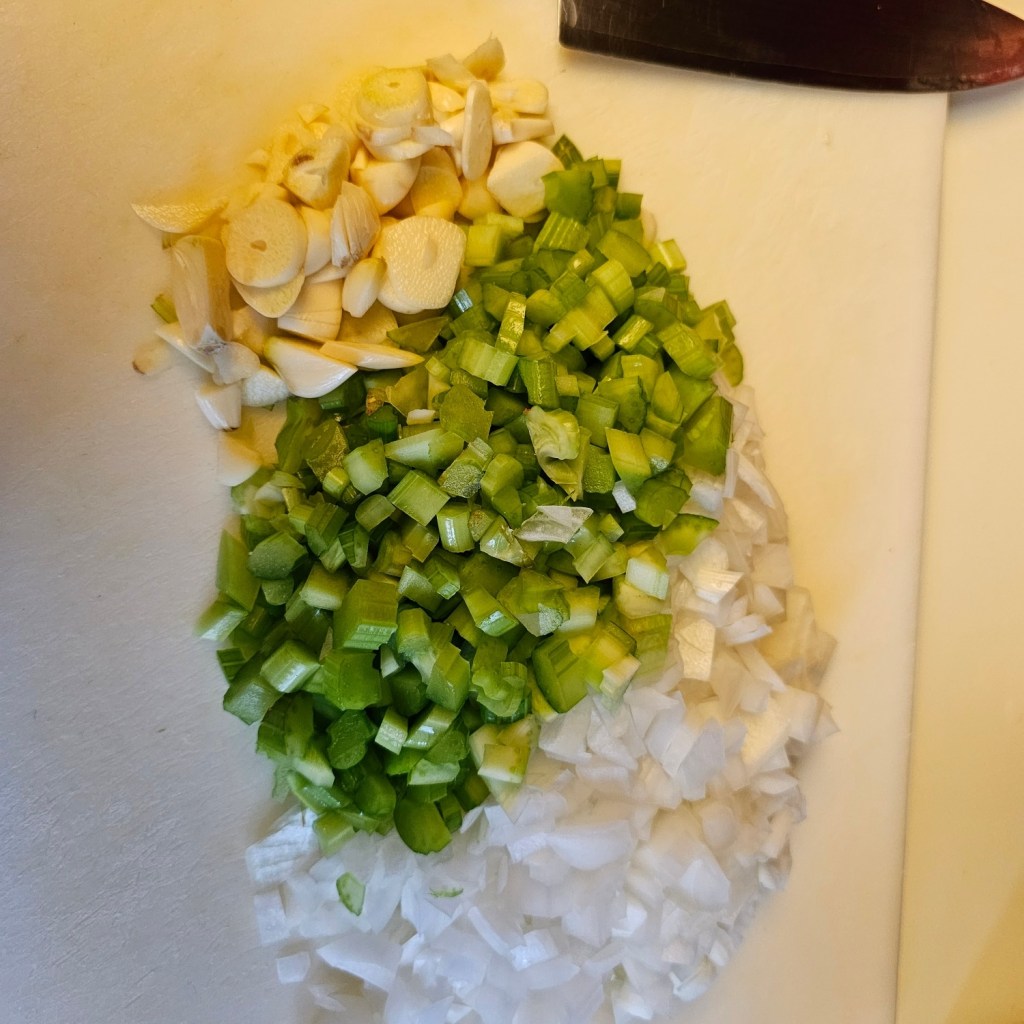
– Dice the strips into small celery cubes.
3. Carrots:
– Cut off both ends of the carrot.
– If the carrot is thick, halve or quarter it lengthwise.
– Slice the carrot into planks.
– Stack the planks and cut them into strips.
– Dice the strips into small carrot cubes.
Remember, practice makes perfect when it comes to dicing. Safety is crucial, so always use a sharp knife and proper cutting techniques to avoid accidents. Enjoy your diced vegetables for your culinary creations!
The sizing of a dice
Dicing vegetables or other ingredients into various sizes of dice is an essential skill in cooking. Here are the most common sizes of dice, explained in detail:
1. Large Dice:
– Size: Approximately 3/4 inch (2 cm) on all sides.
– How to Prepare:
– Start by cutting your ingredient into planks that are about 3/4 inch thick.
– Stack the planks and cut them into 3/4-inch-wide strips.
– Finally, dice the strips into 3/4-inch cubes.
– Usage: Large dice is suitable for ingredients that you want to be noticeable and maintain some texture, such as potatoes for stews or casseroles.
2. Medium Dice:
– Size: Approximately 1/2 inch (1.25 cm) on all sides.
– How to Prepare:
– Begin by cutting your ingredient into planks that are about 1/2 inch thick.
– Stack the planks and cut them into 1/2-inch-wide strips.
– Dice the strips into 1/2-inch cubes.
– Usage: Medium dice is versatile and commonly used in a wide range of recipes, from soups to sautés.
3. Small Dice:
– Size: Approximately 1/4 inch (6 mm) on all sides.
– How to Prepare:
– Slice your ingredient into planks that are about 1/4 inch thick.
– Stack the planks and cut them into 1/4-inch-wide strips.
– Dice the strips into 1/4-inch cubes.
– Usage: Small dice is ideal when you want your ingredients to blend seamlessly into a dish, like mirepoix in a sauce or finely diced vegetables for a salad.
4. Brunoise:
– Size: Approximately 1/8 inch (3 mm) on all sides.
– How to Prepare:
– Begin by cutting your ingredient into planks that are about 1/8 inch thick.
– Stack the planks and cut them into 1/8-inch-wide strips.
– Dice the strips into 1/8-inch cubes.
– Usage: Brunoise is an extremely fine dice used for garnishes, sauces, or when you want ingredients to melt into the dish, like minced garlic or shallots.
These various dice sizes allow you to control the texture, appearance, and cooking time of your ingredients, contributing to the overall quality of your culinary creations. Practice and precision will help you master these techniques over time.


 Cooking At Home Professionally
Leave a comment